Thursday, June 17, 2010

A Rare Discovery

The Hanger Steak

Most people have never even heard of this elusive wonder, and it's no surprise why. It sometimes goes by another name, the Butcher's Steak, on account of the butchers would tend to keep this piece of meat for themselves rather than sell it. Reason being is that it is said to contain more flavor in it than the Tenderloin, though it's not quite as tender.
Now that you know some of the history of it, you should learn about the etymology and where it comes from on the cow: it hangs off the diaphragm, which is why it is called the Hanger Steak (sometimes also known as the Hanging Tender). A lot of people are going to think "ew, it's the diaphragm!" but in reality it's one of the best areas: smack dab between the Lungs, Heart and Liver. The Lungs provide fresh oxygen, making it a very healthy muscle; the Heart provides it with fresh blood, making the flavor intense; and the Liver provides it with very clean fluids, making the flavor very clean.
Since it's not a very popular cut of meat in the household, there aren't very many recipes for it. You also don't want to experiment with too many flavors with this cut, since it is very flavorful on its own.

My experiences with it have been excellent so far. I had received six 5oz steaks from work. It was a "new" product that we've never carried before, and my boss thought it'd be nice if I knew about it, so he gave me a "demo" of it. I asked him how much they would be in case I wanted to buy some at a later time, and he said that it's $9.90/kg ($4.50/lb) and that a whole roast would be ~$13, so I bought a whole roast.
Since they were frozen when I got them, I threw the steaks into the fridge to thaw out over a couple days, and tossed the roast into the freezer. Two days later I pulled the steaks out and they were ready to go, however I think I had them sitting too close to the back of the fridge as one of the steaks was still frozen solid.
My boss also gave me a recipe to try with the steaks, so I thought "Hey, why not give it a try? I don't know what else might go with it, so I'll use a pre-approved recipe before I make my own." It was pulled off of Epicurious, so I'll just post a link to it.
They turned out amazingly. I was not expecting the steaks to have that much flavor, and the shallots in red wine vinegar (I used half a cup of the vinegar since I didn't have any red wine at the time) really pushed it over the edge for me.

Now it's been roughly 3 weeks since then and I figured I'd give the roast a try. I wanted to do something different with it that I've never tried before (my roasts are usually just baked in my toaster oven, smothered in a sauce, and cooked to perfection). The week before I bought the roast, I was at my cousin's wedding and her brother was doing the catering. He told me that the roast he made was simply marinated in red wine overnight, half of the wine was drained, then it was roasted in a slow-cooker for about 5 hours. Super easy and it tasted phenomenal, so I decided to go with it. I ran to the liquor store to find the cheapest and biggest bottle of red wine (if you ever plan on cooking with wine, NEVER use the cooking wines found in grocery stores or anywhere else. If you would never drink the wine out of a glass, then you shouldn't cook with it either) and it was a 1.5L Cabernet (which pairs nicely with red meats) for only $12. I also got another Cabernet Sauvignon for $5 (750ml) that I was planning on drinking, but I ended up having to pour the majority of it in with the other bottle to top it off.
I set the roast in my slow-cooker dish and poured the wine over it, then let it sit in the fridge for the night and part of the next day. Since I was marinating it in my slow-cooker dish, I didn't need to worry about the mess from transferring dishes and draining and all that. When it came time to start cooking it, I simply poured off about half of the wine down the drain, then set the temperature to Low (my slow-cooker has Off, Low, High, Keep Warm) for the first 20 minutes to let the dish warm up a bit, then cranked it to High for 40 minutes to boil down the wine into a nice thick sauce, then set it to Low again for the next 6 hours, adding a couple handfuls of baby carrots.

Photobucket

I don't know if I would recommend doing this marinade, as I felt it covered up a lot of the flavor that I was tasting in the Shallots with Red Wine recipe. However, it did tenderize the meat to the point where I barely had to chew anything before it just fell to shreds. Perhaps if I ever get my hands on more of these beauties, I shall simply bake it like a traditional roast or try grilling/broiling it like a steak.

Saturday, May 15, 2010

A Hydroponics Bay Construction

A few weeks ago my girlfriend brought over a baby Strawberry plant as a gift. It was still blooming, and I thought "awe, ain't that cute?!"
Specific directions were given to me to water it regularly and give it fertilizer every 3 to 4 days.

What did I do?
I stuck it on the window sill, water it every morning, and haven't even thought about giving it fertilizer.

I now have one Strawberry that is growing in size quite nicely and is even starting to turn red. There's 4 other smaller Strawberries starting to form, but they're way behind.

This kind of got me thinking about starting to grow my own plants from seeds for fun. I mean, I had already kind of harvested some vigilante seeds from a few Serrano Chili pods, as well as from some Thai Chili pods.

That was my project tonight. I went to Zellers and bought a 8x2 Peat planter greenhouse as well as a larger planter to transplant my Strawberry plant into. I also got 100 styrofoam cups as well, but that's for later use. Then I got some all-purpose soil and went at it.

First I transplanted my Strawberry plant into the bigger planter, then I filled the original smaller planter with soil, then divvied up the remainder of the soil into the peat planters. I decided to divide the planter in half so that one side was all Thai Chilis while the other side was all Serrano Chilis. I then made a small hole with my pinky finger in each planter and put two of each respective seed into each planter, covered them up, watered them a bit, and set on the window sill. I then labeled each side so that I know which ones are which.

The result is this:


The far left is the original planter the Strawberry plant came in.
The middle is the 8x2 Peat planter with Thai on the left and Serrano on the right.
The far right is the Strawberry plant in the new/bigger planter.

Closeup of the Strawberry plant:


Now, since I used up all of my soil, I couldn't do anything with the styrofoam cups.
However, I am planning on going to Zellers sometime really soon to get some more, and possibly some other seeds for herbs and vegetables (like Parsley, Oregano, Basil, Beans, Peas, etc) to try creating my own little indoor garden.

Monday, May 10, 2010

This is why I stick to buying salmon

I'm just copy/pasting this from my Facebook account, but it still belongs in here. I added in the bit about the Snapper just for this post so it's a little different than Facebook.

First, to get the ball rolling is a moral concern about Tilapia.
1. Fact: Tilapia has very little fat, calories, carbs, or sodium, and is an excellent source of Phosphorus, Niacin, Selenium, B12 and Potassium.
2. Fact: Tilapia sells like hotcakes in gourmet stores and high-end fish markets.
3. Fact: Tilapia consume over 6 times their own mass in other fish's fecal matter.
4. Fact: Tilapia are #99 on the IUCN's 100 of the World's Worst Alien Invasive Species list.
It is a healthy fish to eat, but at what cost?
They are widely used as biological control for aquatic plant problems.
The fish is known as a "shitmouth" in most aquatic circles, and is also a problematic invasive species that will take over most new territories.
"'Arizona stocks tilapia in the canals that serve as the drinking water sources for the cities of Phoenix, Mesa and others. The fish help purify the water by consuming vegetation and detritus, greatly reducing purification costs."
Arizona also dumps their sewage into canals that then feed into water-treatment plants to be purified into drinking water. The tilapia feed on the sewage and act as a biological shit-filter. They'll also eat the algae that grows rampant in the canals from high-levels of waste-nutrients.
On the other hand, they also purify the water from such things, which causes other species of fish to grow in population, size and health. However, since the fish are flourishing on account of an "outside" source and not from their own accord, this could lead to problems later when the pond/aquatic area is over-stocked on the natural fish. But by that time, the tilapia would have reproduced beyond controllable numbers and would need to expand their "zone" to accommodate their numbers. Pushing themselves upstream, they'll be interfering and disrupting the aquatic life-cycle in that area as well. But on the sewage treatment issue, the tilapia are a much more viable way of cleaning than using various chemicals and is a much cheaper solution. The treatment plants can also be cheaper to build and maintain, as there's less waste to be pushed through and processed by human methods.
Then again, if we're talking about farmed fish, this is a whole different story. Sort of.
Salmon fisheries use tilapia to clean the holding pens. What does this mean? Fisheries usually have 1/3 of their holding pens empty for moving fish around. When a pen gets too dirty to keep salmon in, they'll migrate them to a different holding pen, then push tilapia into the previously occupied area to clean. Since the tilapia love eating other fish's waste, they're in heaven while in the dirty, shit-filled pen. They can also hold about 4x more tilapia per volume in a pen than salmon, so there's usually as much tilapia in a fishery as there are salmon, even though there may only be one or two pens for the tilapia.
So my question to you is this: do you feel comfortable eating fish that thrive off other fish's fecal matter, is on the World's Worst Invasive Species List, and acts as a living scrub-brush to clean dirty water?

Moving on from the Toilet Scrubber of the sea to the Head Scratchers of confusion.

What exactly is Basa fish?
This is a question that's been bothering me for a while now.
About 8 months ago, we started getting frozen Basa fillets at work. The box they are shipped in says "Pangasius hypophthalmus." However, we price them as Frozen Basa Fillets (at $1.29/100grams... pretty damn cheap for fish). I decided to Google-Search "Basa Fish" then and saw that it was a type of catfish. I then questioned my boss about it, saying "So basa is catfish, right? I thought catfish was too cheap of a fish to sell here?" (Since I work at a very high-end store) and he was puzzled. "Basa isn't catfish... it's closer to sole than catfish, but quite a bit oilier, like a cod almost. Actually, I don't * know, I just sell the * stuff." and he laughed. Those weren't his exact words, as I left the profanity out where the asterisks are.
But now that I finally brought a couple fillets home to try, I'm doing some research before I start cooking it. I remembered that the box had "hypophthalmus" on it, so I Google-Searched "Basa + hypophthalmus" and found a Wikipedia Article on Iridescent Shark.
WTF?
The second sentence explains it all:
This fish is also known as ... striped catfish in the food fish market, and occasionally incorrectly as basa...
Basically it's a catfish, but known as a shark and sold as a totally different fish called basa.
So if you're ever in the market to buy Basa, make sure it's the real Basa, which is VERY hard to find in North America, as 90% of basa sold is actually this "Pangasius hypophthalmus" catfish, when you should be finding the "Pangasius bocourti" catfish.
Then again, you could swing it the other way and say you're having shark for dinner.

Another fish that confused me was Lingcod.

Being a fish unique to the west coast of North America only (Basically from Anchorage, Alaska down to La Paz, Mexico), it's a very common fish in seafood markets along there. However, the majority of people buying it falsely believe that it is a type of cod-fish.
Not many people buying it know that there's also a fish called Ling (Common Ling) that's fished and eaten in Northeastern Atlantic waters and is common in Iceland, British Isles and the Norse coast. It's flesh is similar to cod and is usually interchangeable in most recipes.
Cod, on the other hand, is a very common place fish found along the coastlines of northeastern US, around the Maritimes in Canada, around Greenland, Iceland, British Isles, Spain, Portugal, the English Channel, Norway, Sweden, Denmark, Netherlands and Germany. Surrounding countries periodically get Cod imported. There's also Pacific cod, which is three times the size of Atlantic Cod and found around the northwestern parts of the US and along the BC/Alaska coastline.
Then we come to Lingcod. Not very close to Cod-fish or Ling, it received its name simply because it resembled them.
It's very high in Protein, but also very high in Cholesterol (30% and 12% daily intake/100grams respectively) and is considered a sub-par fish for healthy eating.
Basically what I'm trying to say here is that if you're buying Lingcod, it's not a cod-fish, nor is it ling. It's a totally separate family and should be treated as such.

Following the lines of Cod-fish, I want to touch on Sablefish.

When I first started working at Urban Fare, we were selling Sablefish faster than we were selling Ahi Tuna. However, it was expensive for us to get in, so we stopped carrying it around April of '09. During it's time being sold with us, I tried to find out what it was. My boss kept saying that Sablefish is Black Cod and that the names are interchangeable. The only reason it's called Sablefish is so restaurants can mark it as a higher fish than a cod and thus charge more for it (which is weird, because of where they're found). And that's basically what we were doing as well. Our pricing system had Black Cod at 3.99/100grams (on par with Halibut) while Sablefish was at 4.99/100grams (on par with Ahi Tuna), so we priced it as Sablefish.
When we stopped getting it in, people were going ecstatic trying to find Sablefish, and finally settling for the Black Cod on Granville Island.
However, Sablefish and Black Cod are different genus.
Sablefish are found in the sea beds of the North Pacific 1-2 miles deep, while the Black Cod are found at the opposite pole, around New Zealand and sub-Antarctic waters. This confuses me with the pricing scheme, as the fish coming from Antarctic waters is cheaper than the one fished up by Alaska.
They are commonly labeled as the same fish in markets, and are usually interchangeable in most recipes, but are a vastly different fish. I highly suggest making sure you are actually getting Sablefish when you ask for it at the market, as well as actually getting Black Cod.

Another one to look out for is Red Snapper.

I didn't realize this until just recently, but the Red Snapper we get in at work goes by the name of Red Snapper at Blundell Seafoods, while it goes by Rockfish over at Albion Fisheries.
Doing a bit of research shows me that Red Snapper's species are in the Lutjanus genus, while Rockfish are in the Sebastes genus. Totally different Order, totally different Family, totally different Genus. Nowhere near the same species. I'm assuming that since two competing seafood distributors in Vancouver refer to them by different names, they must be different fish, but mistakenly labeled as Red Snapper. I know that there is a large difference when we get the fillets in at work: Blundell's fillets are MUCH larger than Albion's (sometimes up to 350grams as opposed to 125grams), but the taste is pretty much identical between the two.
I'm not sure how other seafood distributors label their Red Snapper, as I've only ever dealt with those two, but I would just make sure you are actually getting Red Snapper an not Rockfish, or some other fish from the same family as the Red Snapper (Lutjanidae family would encompass all Snappers, and there's about 100 different species under the Snapper umbrella).

Wednesday, April 28, 2010

DIY Cheese

Cheese... Where to begin?
I recently found out just how simple it is to make your very own cheese in just a few hours. I probably shouldn't have tried this tonight, as it's currently 4:23 AM and I have to wake up at 9 for work. But hey, I promised my girlfriend something special (and by special, I mean something that I've never tried before, no way to know if it turned out correctly, and no way to know if she'll even like it) for our "date night" tomorrow night.

Enough blabbering about young missies that you'll never have a chance of meeting. On to the good part of this: making home-made Paneer.

"I wanna make my own cheese. WTF do I do?"

Simple, really. Go to the store and buy a jug (make sure you have a big enough pot at home if you're buying a 4L jug) of homo milk (not homosexual milk, silly... unless you live on Davie, that is) which is 3.25% Milk Fat. The more fat there is, the more/better the cheese will be. While you're at the store, grab a bottle of lemon juice (you only need 1/8 cup for 2L milk, or 1/4 cup for 4L milk), or perhaps some white vinegar... or really any kind of liquid with a high amount of acid in it. I read somewhere that the vinegar has better drops than the lemon juice, but the lemon juice gives better XP. I suppose you should also grab a cheese cloth while you're there.

Now that we have our questing items, it's time to craft something.

Pull out the big pot I spoke of earlier and pour ALL the milk into it. Crank the heat to 75% and stir occasionally, making sure to scrape the bottom of the pot. If you don't, the milk fat will stick to the bottom and burn, then you'll get weird orange spots in your cheese... which is what happened to mine.

Photobucket

Now that we have the items gathered, we need to get to the kitchen.
Make sure you have a pot big enough to hold all the milk you're going to use. I thought my pot was plenty big, but it barely held a 2L carton.

First, pour all the milk into the pot and crank the heat to 80%. While it's heating, line a colander or a bowl with some cheese cloth, making sure to leave some draping over the edge so you can fold it up later.

Photobucket

Be sure to stir the milk frequently so it doesn't burn to the bottom. Scraping the bottom helps a lot as well. When it starts to get hot, it'll begin to foam at the top:

Photobucket

When that happens, make sure you have the lemon juice handy. As soon as the milk starts to boil, it'll begin to rise very quickly and you'll notice it curdling as well. Be sure to not let it boil over. Once it starts boiling, remove it from the heat and stir in the lemon juice.

Photobucket

The milk will curdle more rapidly as soon as the acid enters, so stir it around nice and good. Let it sit like that for about 20-30 seconds to make sure it finishes it's job. After it's done sitting for that bit, it'll be time to separate the curds from the whey (which is the left over milk juice after the fat clumps together into curds). To do this, simply pour it all into the colander lined with cheese cloth. It'll look quite sickly, but that is what the cheese is made from.

Photobucket

As you can see, I was careless and let it burn to the bottom of the pot. When I tried scraping it off, it scraped the brown stuff off and that's now sitting in my curds.

After the whey has been drained off, let the curds sit there until it's relatively cool enough to handle with your hands (about 20 minutes or so). When that's ready, roll the cloth up to press out any remaining whey, kinda like wringing out a cloth, so to speak.

Photobucket

I guess I forgot to take a picture of the next step, but it's pretty simple to explain:
Fold the cheese cloth up into a ball shape (or place it all into a mold/press) and then place a heavy weight on top of it. I just filled the pot with water, put a plate on top of the cheese cloth and then put the pot on top of the plate.

Let it sit for about 4 hours (I was playing Battlefield: Bad Company the whole time), then peel back the cloth and VOILA! Your cheese should be ready. It should be slightly crumbly, but with a texture like firm tofu, and kind of spongy.

Photobucket

It has a fridge life of about a week, and there's a couple other interesting points about it:

-> It'll never melt. Pan fry it, deep fry it, broil it, throw it in a flambe... it'll retain it's shape just like tofu.
-> It can be put in the freezer and won't degrade in quality when thawed.

This is also very similar in how Ricotta is made, but we'll tackle that another night.

Tuesday, April 27, 2010

Broiled Dijon Sole

Jumping straight into the recipes, here's something that I made tonight:

500 grams of fresh (or thawed) Sole fish fillets (Shad or flounder works fine as well)
1 tbsp melted butter/margarine
1 tbsp Dijon Mustard
1 tbsp Prepared Horseradish
1 tbsp finely chopped yellow onion
1 tbsp lemon juice
1/4 tsp salt
1/8 tsp black pepper

Method:
Preheat broiler. In a bowl, mix everything except the fish. Lay the fillets out on a lipped baking tray/lipped cookie sheet, tucking the thinned parts under to make it thicker. Brush fish with the mixture and broil 3-5 minutes (or until fish flakes when tested with fork) with the tray 5 inches from the heat source.

Serving suggestion:
Fry some sliced mushrooms with butter/margarine, garlic and onions to serve on top.
A word of caution though: the more garlic you use, the less likely you are to be kissed later. Also, the more onions you have, the more you'll be rolling in bed that night.

Peering into the Bag of Holding

Every kitchen needs utensils in order for it to function. I've compiled a list of basically everything I own and will try to keep it up to date when adding new items.

My main equips are as follows:
Toaster-Oven of Infernal Blaze
George Foreman Grille of Scorching Heat
Scungy Frying Pan of the Hill People
Wok with a Flatulence enchantment

If you don't have those four things, we can improvise. A regular oven can be used instead of a toaster-oven, but cooking times will be slightly different (since it's a much larger area inside the oven), a BBQ instead of a George Foreman (again, cooking times will be different for the heat variables, and you'll get a different flavor because of the smoke and charred edges), and I'm pretty sure everyone has a Frying Pan...

However, there's some other very useful utensils I use:

Potato Masher
Modern 4-Sided Cheese Grater
Polyurethane Cutting Board
Chef's Knife
Paring Knife
Tourne Knife
Knife Sharpener
Measuring Spoons/Cups
Hand-Held Blender
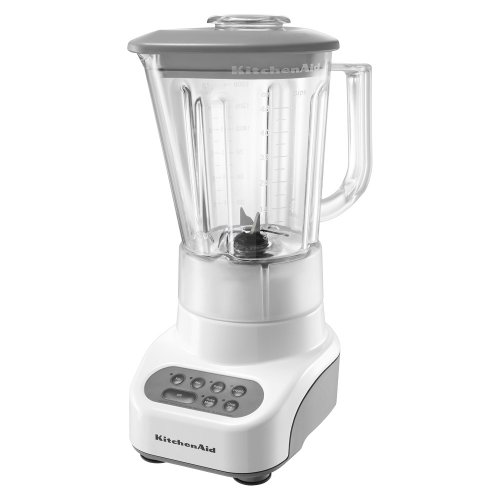
Countertop Blender
Tongs

I'll add more later.

Introduction and testing

Oi.
Thomas Kobelsky here, and I'm the Nerd in the Kitchen. I'm going to be using this blog for several things, but mostly to bring great tasting recipes to your plate.

A bit about myself:
I'm a Videogame Designer (or at least that's what I claim to be, since I can't seem to get a job in that field even though I have gone to school for it), which automatically makes me a nerd. I will be making nerdy references every once in a while, so try to keep up with me.

I also enjoy long walks on the beach at sunset and reading books.
Sorry ladies, I have a girlfriend IRL.

And so, without further ado, let's begin a new game.